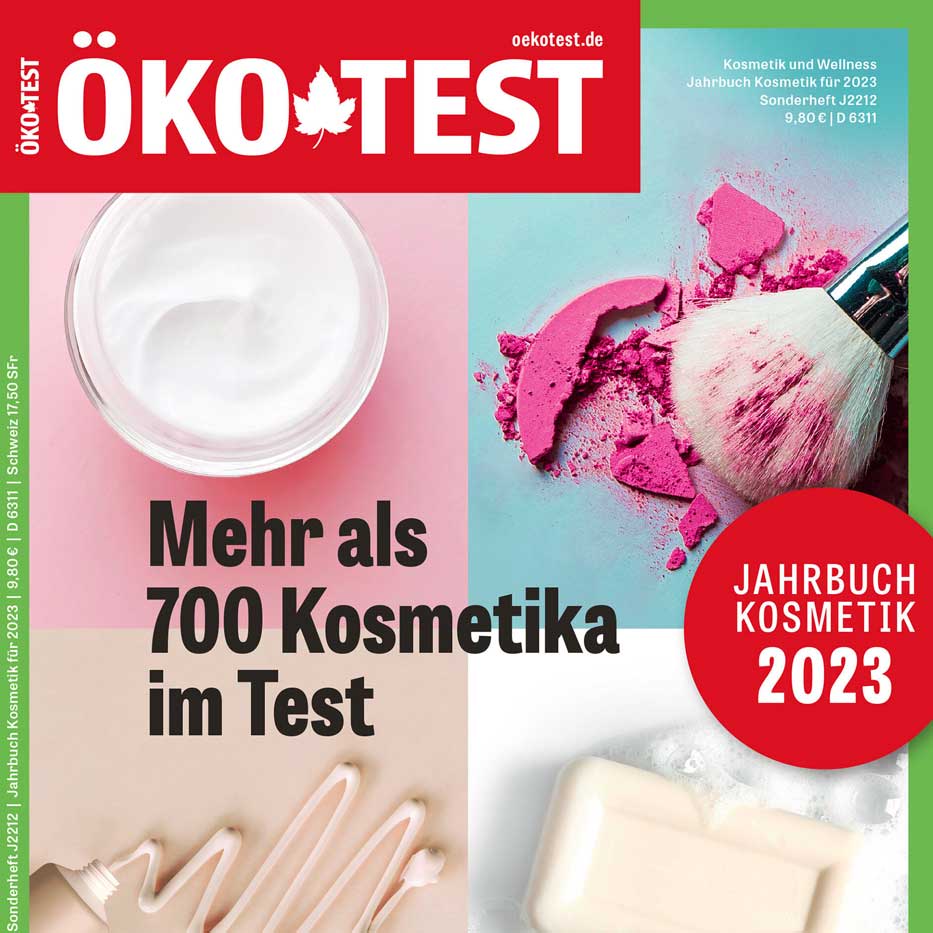
Raw materials developed and continuously produced by us were mentioned in combination with finished products in the 2023 yearbook of the magazine ÖKO-TEST®.
Source, image: Edition type: Digital; Edition name: J2212D; Release date: 08.12.2022.

Modal Title
Request access to this content.
Fill in the form below and we'll review your request.
Request submitted
Your request has been submitted. We'll notify you once approved.

Raw materials developed and continuously produced by us were mentioned in combination with finished products in the 2023 yearbook of the magazine ÖKO-TEST®.
Source, image: Edition type: Digital; Edition name: J2212D; Release date: 08.12.2022.
The Elecampane Extract (INCI: Inula Helenium Extract) is derived from the plant Elecampane (Inula helenium) and is available from CONIUNCTA® in three water-based or water-soluble carrier variants: Glycerin, Propylene Glycol, and Pentylene Glycol. The product is of conventional quality, exists in liquid form, and is aimed at formulators and product developers in the cosmetic and food industries. Two characteristic ingredient groups are at the heart of this extract: the polysaccharide inulin and the sesquiterpene lactone alantolactone. Inulin as a Quantified Lead Marker The primary marker of the Elecampane Extract is inulin, a polysaccharide from the fructan group. The indicative content in the product is 4.9 to 13.9 mg/mL. In the dry drug mass, values of 20 to 44 % are reported in the literature (ESCOP Monographs, 2nd). Inulin is therefore the quantitatively dominant marker of this extract and serves as the reference value for characterizing the individual carrier variants. In addition to inulin, the extract contains the sesquiterpene lactone alantolactone. No fixed concentration is specified for this in the product; however, the CDS states that at an extract use level of 2 %, approximately 98.0 to 278 µg/mL of alantolactone are present in the formulation on a calculated basis. Documented Activity Profile for Cosmetics In the cosmetic context, the CDS assigns the properties anti-inflammatory, anti-irritant, and soothing to alantolactone. At the molecular level, NF-κB and IKK-β are cited as targets. Within the claim framework under EU Regulation (EU) No. 655/2013, the claim areas Astringent, Balancing, Pore-refining, and Skin-plumping are additionally listed. These statements originate exclusively from the dossier and are to be used in accordance with cosmetic regulations. The extract is suitable for cosmetic applications in accordance with Regulation (EC) No. 1223/2009, is free from fragrance allergens subject to declaration under Annex III, and is suitable for vegan formulations. The recommended use concentration according to the product data sheet is 2 to 5 %; the CDS additionally cites a range of 1 to 3 % for cosmetic applications. Use in Functional Food and Beverages For the food sector, the CDS lists suitability as a Nutritional Antioxidant and as a traditional dietary ingredient, as well as thematic references to Metabolic Health and oxidative stress reduction. The Glycerin carrier variant is intended for these applications. The recommended use concentration in functional food and beverages is 0.5 to 2 %; at 1.3 % extract use, calculated values of 61.3 to 174 µg/mL result in the formulation. The terms stored as marketing keywords have not been reviewed under regulatory law and are not presented here as substantiated effects. Carrier Variants and Their Composition The three variants differ in their standardization and carrier medium, and therefore in their suitability for different formulation systems: Glycerin variant (INCI: Glycerin, Inula Helenium Extract): anhydrous glycerin (≥ 99.5 %) as carrier, approx. 70 % of the finished product; extraction solvent is purified water, which does not remain in the final product. This variant is also suitable for food applications. Propylene Glycol variant (INCI: Aqua, Propylene Glycol, Inula Helenium Extract): water approx. 40 %, extract approx. 30 %, Propylene Glycol approx. 30 %. Pentylene Glycol variant (INCI: Aqua, Pentylene Glycol, Inula Helenium Extract): water approx. 50 %, extract approx. 30 %, Pentylene Glycol approx. 20 %. Regardless of the variant, the extract content is approximately 30 %. The products are clear liquids with a characteristic color (amber to light brown) and a relative density of 1.03 to 1.06. pH, density, and refractive index of each batch are documented in the CoA. We explain more about our gentle process on the AVE Technology page. Handling, Storage, and Documentation According to the SDS, the Elecampane Extract is not a hazardous substance under Regulation (EC) No. 1272/2008 and is not classified as dangerous goods for transport (ADR/RID, IMDG, IATA). It is classified in storage class 12 (non-flammable liquids, TRGS 510). The shelf life is 24 months when stored dry between 10 and 30 °C in the original sealed container. Storage-related color changes, turbidity, or precipitation may occur; filtration is possible in such cases and does not impair quality. All batch-specific parameters as well as TDS, SDS, and CDS are available via our technical documentation. Sourcing and Classification within the Portfolio The Elecampane Extract is part of our classic plant extracts; the Glycerin variant is additionally assigned to the Glycerin extracts. For formulation projects, our technical team provides support in selecting the appropriate carrier variant and the associated documentation. View Elecampane Extract in the CONIUNCTA® shop. CONIUNCTA® - Raw materials, data, and services for future-proof formulations.
Read moreThe Acerola Powder Extract 10:1 (INCI: Malpighia Glabra Fruit Extract) is a fruit extract derived from the acerola, obtained from the fruit portion of the plant. It is supplied as a brown powder with maltodextrin as carrier and a documented lead marker: ascorbic acid (Vitamin C). For formulators in the cosmetic and food industries, this raw material combines a clearly defined phytochemical profile with the ease of handling of a powder galenic form. This article summarises the properties documented in the data sheet and outlines the fields of application. Ascorbic Acid: the Quantified Lead Marker At the core of the Acerola Powder Extract is ascorbic acid (Vitamin C). The CDS specifies an indicative content of 180 to 350 mg/g in the product. This value is based on a dry drug with 3 to 8 % ascorbic acid, a concentration factor of 10:1, a recovery rate of 60 to 80 %, and is capped at 350 mg/g. This allows the ascorbic acid input in a formulation to be estimated by calculation: at an extract proportion of 2.8 %, this results in 5.0 to 9.6 mg of ascorbic acid per gram of formulation. In addition to the primary marker, the CDS documents anthocyanins at a proportion of 0.2 to 0.5 %. Documented Efficacy Profile The CDS lists the following documented effects and regulatory claims for the Acerola Powder Extract: antioxidant protection (basis: phytochemical profile and published literature), support of collagen synthesis, brightening, and, in the food context, the function as a nutritive antioxidant. The data sheet cites ROS scavenging, prolyl hydroxylase, and, on the food side, metabolic health and oxidative stress as targets. These statements are closely tied to the data sheet. Claims beyond those stated here, in particular of a medical or disease-related nature, are not part of the documentation and are not asserted by CONIUNCTA®. Galenic Form and Technical Parameters The TDS describes a brown powder with a characteristic odour and taste. The particle size is specified as 80 mesh (at least 95 % through 80 mesh), the loss on drying is at most 5.0 %, and the total ash is likewise at most 5.0 %. The composition consists of 80 to 99 % acerola extract and 1 to 20 % maltodextrin; ethanol and water are used as extraction solvents. The extract ratio is 10:1, the botanical origin is Malpighia Glabra with country of origin China, and the processed plant part is the fruit. The stated colour ranges from golden yellow to light brown; according to the disclaimer, a colour change depending on storage conditions and temperature cannot be excluded. Product form: Powder, 80 mesh Extract ratio: 10:1 Loss on drying / total ash: each at most 5.0 % Density: 0.50 to 0.70 Shelf life: 24 months under dry storage conditions between 10 and 30 degrees C in the original sealed container Safety and Storage According to the SDS, the Acerola Powder Extract is not a hazardous substance under Regulation (EC) No. 1272/2008: no hazard pictograms, no signal word, no H or P statements. No PBT, vPvB, or endocrine-disrupting properties (at or above 0.1 %) are present; no UN hazardous goods number exists. The powder is classified under storage class 13 (non-combustible solids). Storage in a cool, dry, well-ventilated, and airtight-sealed location away from heat and moisture is recommended, according to the SDS at 15 to 25 degrees C. Safety goggles are recommended; skin protection is not required, and respiratory protection is only necessary if aerosols are generated. Fields of Application in Cosmetics and Food According to the specification, the Acerola Powder Extract is suitable for all cosmetic and food variants. For cosmetic applications, the CDS specifies a use concentration of 0.5 to 5 % (recommended 2 to 5 %). In the food sector, for example in functional food and beverages, the data sheet states 0.5 to 2 %; at an extract proportion of 1.3 %, this results in 2.3 to 4.4 mg of ascorbic acid per gram of formulation. The powder galenic form supports incorporation into dry systems and aqueous phases. Our technical team is available for individual advice on specific formulation and dosage questions. The Acerola Powder Extract 10:1 is a conventionally sourced raw material from the classic botanical extract range of CONIUNCTA®. An overview of further botanical extracts can be found in our classic plant extracts; the associated TDS, SDS, and CDS are available in the technical documentation. Registered customers receive batch-related certificates of analysis via our platform. View Acerola Powder Extract 10:1 in the CONIUNCTA® shop. CONIUNCTA® - Raw materials, data and services for future-proof formulations.
Read moreThe CONIUNCTA® PRO CPO-99 White Tea Oil Extract (INCI: Camellia Sinensis (White Tea) Leaf Extract) is an anhydrous, oil-based leaf extract from the CONIUNCTA® PRO premium range. Unlike aqueous tea extracts, this preparation transfers the lipophilic constituents of white tea into a purely oil-based system, making polyphenol esters accessible for anhydrous and oil-rich formulations. For formulators seeking to incorporate antioxidant active principles into oils, balms or anhydrous care products, this opens a technologically independent alternative to classical glycerin extracts. Why a Lipophilic White Tea Extract? White tea, like green and black tea, belongs to the species Camellia sinensis, but is obtained from young leaves and buds using particularly gentle processing. The CPO-99 specifically utilises the lipophilic fraction: instead of water-soluble catechins, esterified, fat-soluble polyphenols take centre stage. These can be integrated directly into oil-based carrier systems without requiring emulsifiers or solubilisers for an aqueous phase. The preparation is a clear liquid with a characteristic light green colour. Markers: Catechin palmitate and Lipophilic Polyphenols According to the data sheet (CDS), the primary marker of the CPO-99 is Catechin palmitate together with lipophilic polyphenols, with an indicative content of 25-158 µg/mL in the product. The literature content of the dried plant is 0.1-0.5% (source: Zhong 2012, Food Chem). Lipophilic polyphenols (polyphenol ester class) are listed as a further class of actives. At a use concentration of 2%, this results in a calculated active delivery of 0.50-3.2 µg/mL in the formulation. These values are indicative; product-specific values should be taken from the respective certificate of analysis (CoA). Documented Efficacy Profile The CDS documents the following properties for the extract: astringent, balancing, Elasticity support, Glow / radiance, and a Pro-age profile. In addition, antioxidant protection against UV and environmental stress, ROS scavenging, inhibition of LDL oxidation, support of endothelial function and lipid metabolism are described. The molecular targets listed in the CDS include, among others, ROS, the Nrf2/ARE signalling pathway and MMPs. These statements reflect the current status of the data sheet; the cosmetic claims in the final product are the sole responsibility of the person placing the product on the market. Three Carrier Oils for Different Applications The CPO-99 is available in three lipophilic carrier variants, each with an extract fraction of approximately 30% in an anhydrous, water-free system: Jojoba oil (Simmondsia Chinensis Seed Oil): wax ester-rich carrier oil, suitable for skin-compatible, skin-friendly oil phases. Squalane (plant-derived): light, spreading carrier system for sensorially elegant applications. Sunflower oil (Helianthus Annuus Seed Oil): versatile standard carrier oil that, according to the specification, is also suitable for use in food applications. All variants are suitable for cosmetics; the sunflower oil variant is intended for food applications. The recommended use concentration is 2-5% (in the CDS 1-3% as an active ingredient orientation for cosmetics). Further oil-based raw materials can be found in our collection of sunflower oil and oil extracts. Processing, Storage and Safety According to the SDS, the CPO-99 is not a hazardous substance under Regulation (EC) No. 1272/2008, with no hazard pictograms or signal word, no identified PBT/vPvB or endocrine-disrupting properties (>= 0.1%), and is not a UN dangerous good. The shelf life is 24 months when stored dry between 10 and 30 °C in the original sealed container. As an anhydrous preparation containing polyphenols, colour changes, turbidity or precipitation may occur depending on temperature and storage conditions; filtration is possible in such cases and does not affect quality. All batch-specific parameters (density, refractive index) should be taken from the CoA. Premium Positioning and Technical Documentation The extract is part of the premium line and is listed in the CONIUNCTA® PRO collection. It is manufactured using our AVE technology (Adaptive Vacuum Extraction), Made in Germany. The complete TDS, SDS and CDS as well as batch-related certificates of analysis are made available to registered customers via the technical documentation portal. For samples, specification queries and project-specific evaluation, our technical team is available for individual consultation: View CONIUNCTA® PRO CPO-99 White Tea Oil Extract in the CONIUNCTA® shop. CONIUNCTA® – Raw materials, data and services for future-ready formulations.
Read more