


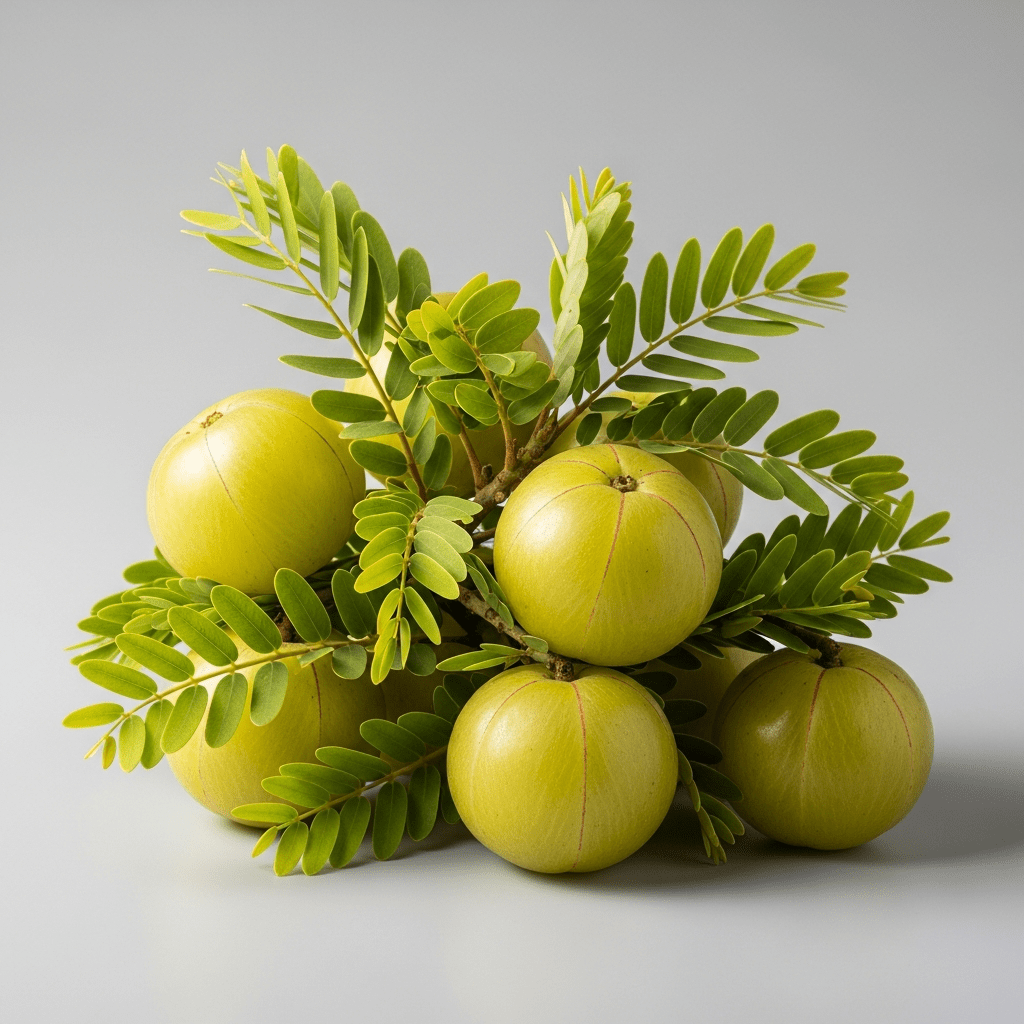
The Amla Powder Extract 10:1 (INCI: Phyllanthus Emblica) by CONIUNCTA® is a gallic acid- and ellagic acid-rich dry extract powder derived from the fruit of the amla tree. Maltodextrin (1 to 20 %) serves as the carrier material; the extract is obtained using ethanol and water. For formulators in cosmetics and food, this powder combines a documented phytochemical profile with a dry, easy-to-dose product form. This article examines the marker profile, action targets, and technical parameters of this raw material.
Gallic Acid and Ellagic Acid: the Astringent Marker Profile
The key markers of the extract are gallic acid and ellagic acid, with an indicative total content of 140 to 350 mg/g in the extract. The literature content in the crude drug is 2 to 5 %; the concentration factor is 10:1 at an extraction yield of 70 to 90 %. According to the CDS, these phenolic compounds are responsible for the astringent, antioxidant, and pore-refining properties of the material. At a usage level of 2 % in the formulation, the powder delivers a calculated 2.8 to 7.0 mg/g of gallic acid plus ellagic acid.
Emblicanins, Ascorbic Acid, and Tannins
Beyond the primary markers, the CDS lists additional compounds: Emblicanin A/B (0.5 to 2 %), ascorbic acid (0.5 to 1.5 %), and an expected total tannin content of 200 to 500 mg/g in the 10:1 powder. This spectrum of hydrolysable tannins and accompanying compounds defines the characteristic profile of Phyllanthus Emblica and forms the analytical basis for the documented targets.
Documented Activity Profile for Cosmetic Formulations
For use in cosmetics under EC 1223/2009, the CDS specifies the following targets: antioxidant protection based on the phytochemical profile, astringent and pore-refining effects (attributed to gallic acid and ellagic acid), as well as protein precipitation and MMP-1 inhibition as cosmetic targets. The recommended use concentration in cosmetics according to the CDS is 1 to 3 %. These properties make the powder a candidate for astringency-focused care and anti-aging concepts.
Use in Functional Foods and Beverages
The material is suitable for both cosmetic and food applications and is vegan. In the food sector (with reference to EC 1924/2006), the CDS lists the targets of nutritional antioxidant, traditional dietary ingredient, and metabolic health and reduction of oxidative stress. The recommended use concentration here is 0.5 to 2 % for functional foods and beverages. At a usage level of 1.3 %, this yields a calculated 1.8 to 4.4 mg/g of gallic acid plus ellagic acid in the final formulation. Responsibility for verifying claim and labelling requirements rests with the party placing the product on the market.
Product Form, Specification, and Handling
The extract is presented as a brown powder with an appearance ranging from golden yellow to light brown, with a characteristic odour and taste. Particle size corresponds to 80 mesh (minimum 95 % pass-through); bulk density is 0.50 to 0.70. Loss on drying and total ash are each a maximum of 5.0 %. The botanical origin is Phyllanthus Emblica, origin China; the fruit or the whole plant is used. According to the SDS, this is not a hazardous substance under Regulation (EC) No. 1272/2008; eye protection is recommended and aerosols should not be inhaled.
- Extract ratio: 10:1
- Carrier: Maltodextrin (1 to 20 %)
- Shelf life: 24 months under dry storage conditions between 10 and 30 °C in the original sealed container
- Storage: cool, dry, well-ventilated, airtight, protected from heat and moisture
Technical Documentation and Sourcing
CONIUNCTA® provides the complete technical documentation (TDS, SDS, CDS) for this raw material. Further classic botanicals can be found in our collection Classic Plant Extracts. Information about our processes is available on the AVE Technology page. You can evaluate the raw material described here directly: View Amla Powder Extract 10:1 in the CONIUNCTA® Shop. Our technical team is available for sample requests and project-specific consultations.
CONIUNCTA® - Raw materials, data, and services for future-ready formulations.


