


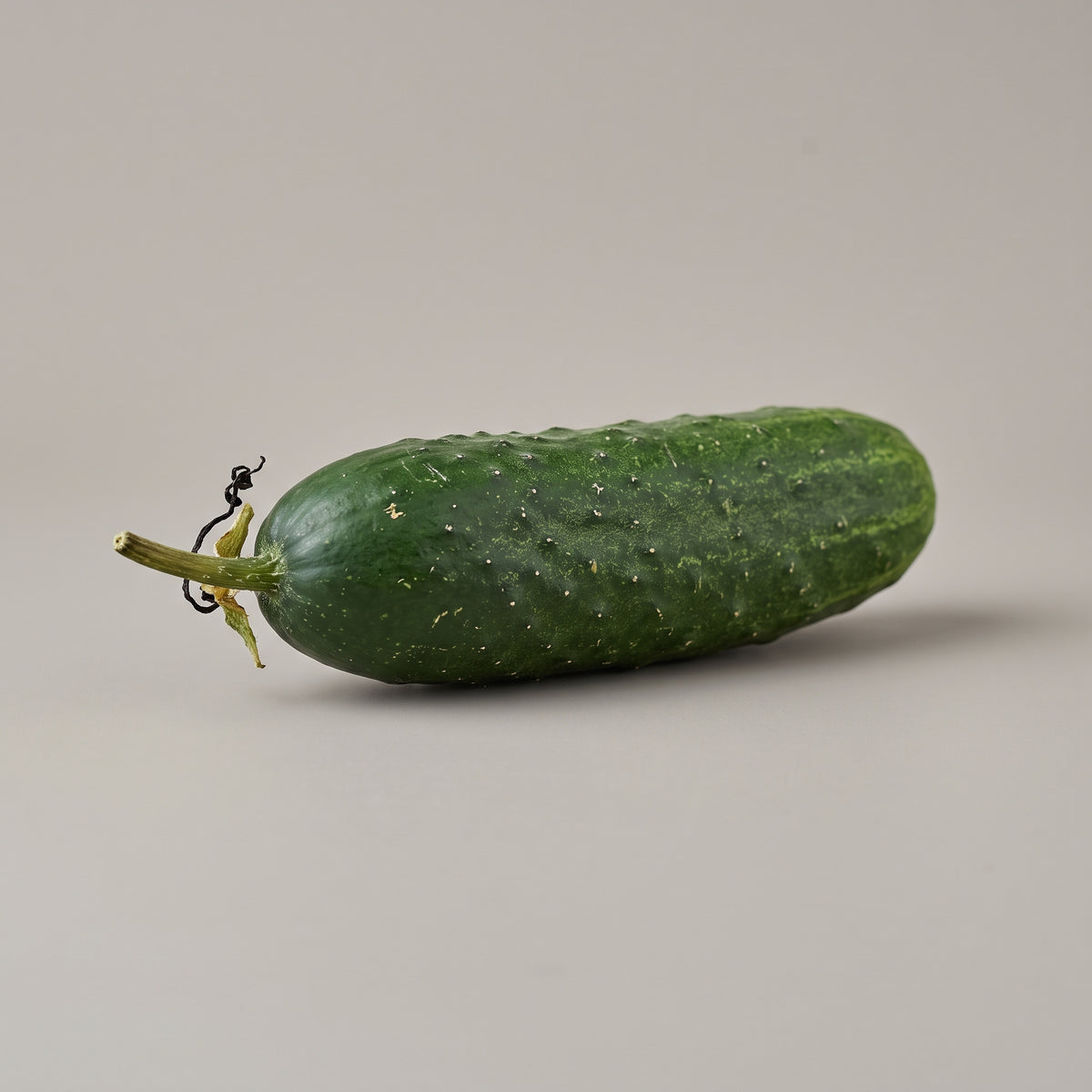
According to its data sheet, the Cucumber Extract from CONIUNCTA® is a raw material with a wide range of uses in both the cosmetics and food industries. It is offered under the INCI Cucumis Sativus Extract as a liquid, hydrophilic extract in three carrier variants: Glycerin, Propylene Glycol and Pentylene Glycol. The product is available in conventional quality, is vegan-suitable according to the CDS and light green in colour. One point is particularly relevant for formulators and buyers: the extract content is approx. 30 % regardless of the variant. The variants therefore differ in their carrier system, and thus in INCI declaration and field of application, not in extract content. Only the Glycerin variant is additionally suitable for food.
A predominantly water-soluble ingredient profile
According to the composition, 1 kg of CONIUNCTA® extract contains the hydrophilic constituents of approx. 30 g of dried plant parts. The technical data sheets document purified water as the extraction solvent, with subsequent standardisation in the respective carrier medium. CONIUNCTA® manufactures the extracts in Germany using the proprietary AVE technology (Adaptive Vacuum Extraction). The botanical origin is stated as Cucumis sativus (cucumber); a specific plant part is not specified in the TDS.
The CDS describes the following characteristic compounds and substance groups:
- Polysaccharides and organic acids: according to the CDS, mainly responsible for the moisturising effect of the extract.
- Vitamins: listed as a characteristic constituent with nutritive and antioxidant function.
- Minerals: characteristic constituent with conditioning function.
- Cucurbitacins: characteristic, but according to the CDS present in the extract only in very low concentrations.
All three carrier variants are hydrophilic systems. A lipophilic oil variant is not documented for this extract.
Ascorbic acid as primary marker: how the value of 21 to 81 µg/g is derived
The CDS names ascorbic acid (vitamin C) as the primary marker, with a calculated content of 21 to 81 µg/g. The derivation is disclosed in the data sheet: the starting point is a literature content of 0.1 to 0.3 % in the dried plant (data source: USDA Nutrient Database, review level). This value is calculated together with the drug-to-extract ratio (DER 1:10), the plant content of 30 g/kg and an extraction efficiency of 70 to 90 %.
This transparency is helpful for raw material evaluation, as it makes clear how the value should be interpreted: it is a mathematically derived, literature-based content, not a standardisation to ascorbic acid. CONIUNCTA® reports batch-specific parameters such as pH at 25 °C, relative density and refractive index in the respective Certificate of Analysis (CoA); density is an article-specific target value for each carrier variant.
Five claim areas and the obligation for independent substantiation
The CDS lists five supported claim areas for Cucumber Extract: Anti-ageing, Balancing, Soothing, Elasticity support and Moisturising. "Firming" is additionally mentioned as a cosmetic effect. For the Moisturising area, the CDS also provides the substance assignment: polysaccharides and organic acids are considered mainly responsible for the moisturising effect.
Crucially, the data sheet explicitly notes that these claims require independent substantiation by the manufacturer of the finished product in accordance with Regulation (EU) No 655/2013. In addition, the CDS mentions a mechanistic background (NF-κB, collagen synthesis, glucocorticoid receptor), but explicitly labels it as not a product claim. For product developers, this means: the claim areas provide technical guidance for the concept phase. However, claims on the finished product must be supported by their own data for the respective formulation.
Glycerin, Propylene Glycol or Pentylene Glycol: three carriers, one extract content
Since the extract content is approx. 30 % in all variants, the choice of carrier is primarily a question of declaration, formulation architecture and target market. The technical data sheets document the following differences:
- Glycerin: INCI Glycerin, Cucumis Sativus Extract. Standardised with glycerin (≥ 99.5 %, anhydrous), final composition approx. 70 % glycerin and approx. 30 % extract content. According to the TDS, a clear to light green liquid with a characteristic odour. Suitable for cosmetics and food.
- Propylene Glycol: Product INCI Aqua (Water), Propylene Glycol, Cucumis Sativus Extract. Standardised in a propylene glycol/water mixture. For cosmetics only; according to the TDS not suitable for food.
- Pentylene Glycol: Product INCI Aqua (Water), Pentylene Glycol, Cucumis Sativus Extract. Standardised in a pentylene glycol/water mixture. According to the TDS, a clear liquid with a characteristic odour, intended for cosmetics.
In practice, three questions typically guide the selection: Which INCI list is desired for the finished product? Is the respective carrier medium already part of the formulation, keeping the declaration lean? And should the same raw material also be used in a food development? For cosmetic use, the CDS and TDS document a use concentration of 2 to 5 % for all three variants. An overview of further extracts on this carrier is available in our collection of Glycerin extracts. Our technical team will address specific formulation and dosage questions individually.
Food application: exclusively with the Glycerin variant
For the food industry, the Glycerin variant is the only approved option. The CDS describes the effect in the food sector as "Traditional dietary ingredient" and states suitability in accordance with traditional use and applicable food regulations. The documented use concentration is 0.5 to 2 %; the TDS classifies this figure as a literature value for functional foods and beverages.
From a regulatory perspective, the safety data sheet points out that allergen labelling under the Food Information Regulation (EU) No 1169/2011 is the responsibility of the food business operator. For manufacturers developing cosmetics and food supplements in parallel, the Glycerin variant offers the advantage of a single raw material with identical extract content for both fields of application.
Safety data sheet, storage and documentation
According to the SDS, Cucumber Extract is not a hazardous substance and is not classified under Regulation (EC) No 1272/2008; pictogram and signal word are not required. It is not dangerous goods under ADR/RID/IMDG/IATA, falls under storage class 12 (TRGS 510, non-combustible liquids) and is classified as WGK 1 (slightly hazardous to water) for all carrier variants. REACH does not apply to the mixture: the plant extract portion is exempt under Annex V No. 8, and the carrier is registered by its manufacturer. For handling, the SDS specifies safety goggles as eye protection and respiratory protection if aerosols form. The safety assessment of the finished product under the Cosmetics Regulation (EC) No 1223/2009 is the responsibility of the responsible person. According to the CDS, fragrance allergens under Annex III cannot be derived, as the essential oil content of the source plant is not documented.
Shelf life is 24 months when stored dry between 10 and 30 °C in the original sealed container; the SDS recommends a storage temperature of 15 to 25 °C. Temperature-dependent colour changes may occur during storage. Should cloudiness or precipitation occur, filtration is required, which according to the data sheet does not affect quality. We provide the TDS, SDS and CDS via our technical documentation; further water-soluble plant extracts can be found in the collection Classic Plant Extracts. For questions about choosing a variant, contact us at info@coniuncta.com or +49 911 47715370.
View Cucumber Extract (Cucumis Sativus Extract) in the CONIUNCTA® shop
CONIUNCTA® – Raw materials, data and services for future-ready formulations.


