


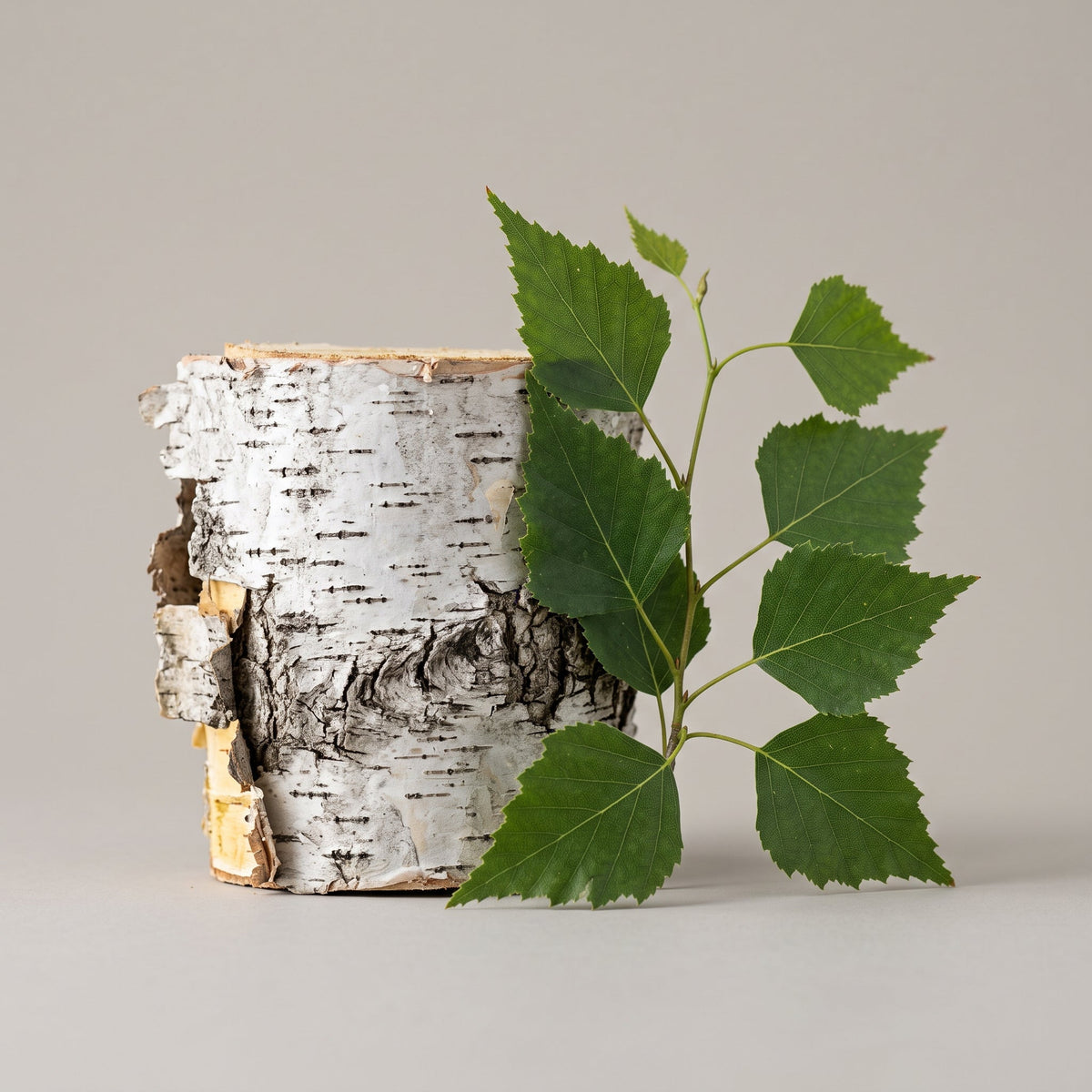
The birch (INCI: Betula Alba) is one of the characteristic tree species of the northern climate zones. For formulators in cosmetics and food technology, CONIUNCTA® supplies Birch Powder Extract as a spray-dried concentrate at an extract ratio of 10:1. The fine, golden-yellow to light brown powder bundles the plant's native classes of compounds in a dispersible form and is suitable as a raw material for water-based as well as functional applications. This article puts the documented markers, the effect profile according to the data sheet, and the processing key data into context for product development.
Why the Powder Form: Concentration 10:1 and Processing
The Birch Powder Extract is produced by spray-drying an extract obtained with water and ethanol; the residual solvents used are removed during the drying process and comply with Directive 2009/32/EC. The result is a characteristic, fine powder with a density of 0.50 to 0.70. Compared to liquid carrier variants, a powder extract offers high concentration without carried-over solvent as well as flexibility in formulation architecture, for example in aqueous systems where it is dispersible. Solubility is extract-dependent; technical testing in the target system is therefore part of the development work.
For handling purposes, the material is not classified as a hazardous substance under Regulation (EC) No. 1272/2008 (CLP) and carries neither a hazard pictogram nor a signal word. When processing powders, eye protection is recommended, and aerosols should not be inhaled. Skin protection is not required according to the safety data sheet.
Flavonoids as the Lead Marker: The Documented Analytics
The primary marker of Birch Powder Extract are the total flavonoids, calculated as hyperoside. The literature content in the dried plant is, according to the CDS, 1.5 to 3.5%; via the concentration factor of 10:1 and a recovery of 70 to 90%, this results in an indicative content in the product of 105 to 315 mg/g. The calculation basis relies on Ph. Eur. and ESCOP as pharmacopoeial and peer-reviewed data sources respectively.
In addition to the flavonoids, the data sheet documents further characteristic compounds: betulin, a bark-specific triterpene (3 to 5% in the bark), and chlorogenic acid at 0.3 to 0.8%. Flavonoids and tannins are named as the defining compound classes. This combination determines the analytical profile of the extract and serves formulators as guidance for batch evaluation based on the certificates of analysis.
Documented Effect Profile Within the Scope of the Markers
The CDS assigns defined effects to the compound classes. The flavonoids are described with antioxidant and UV-protective properties, the tannins with astringent and antimicrobial properties. As a cosmetic effect according to the manufacturer's information,


